
Latest news · Tips
How to date an old photograph
21 October 2026 · 6 minute read
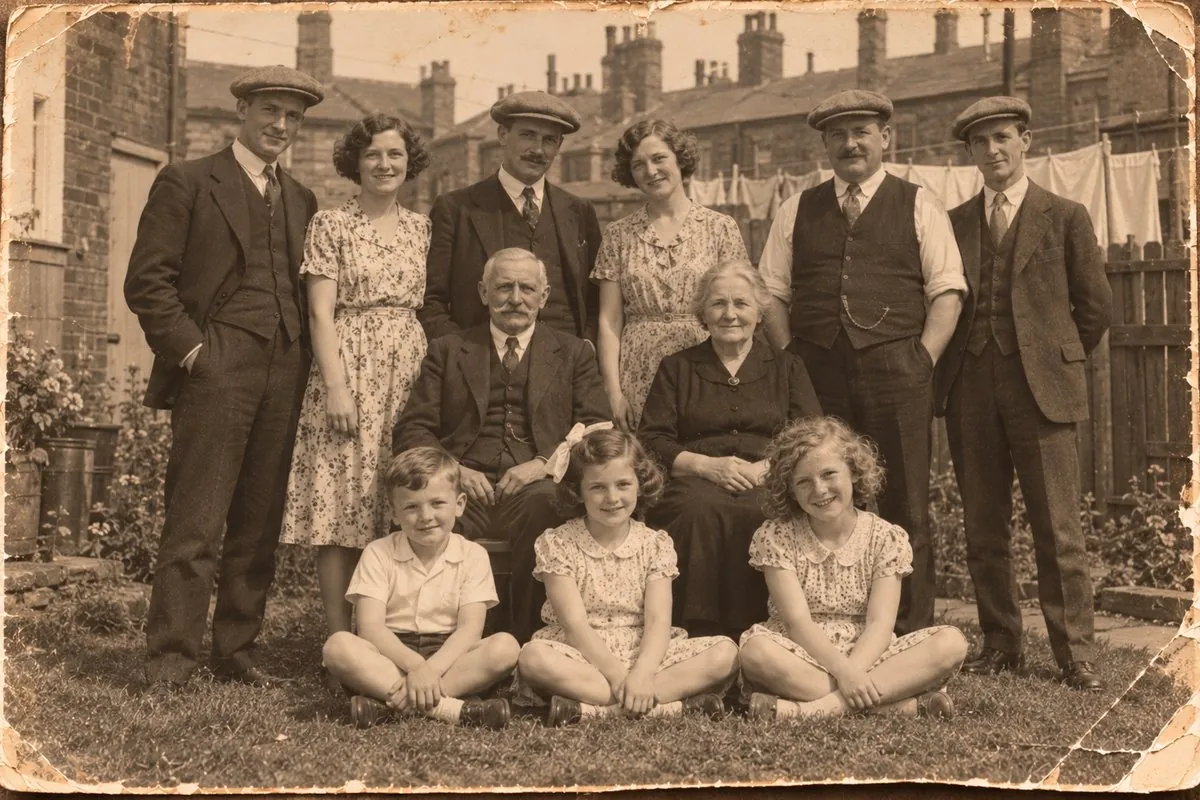
Most old family photographs have no date on them. The person who took them knew when it was; nobody thought the rest of us would need telling. But a photograph is full of clues, and with a little detective work you can usually get to within a decade, and often within a year or two.
Here are the five clues worth checking, roughly in order of how much they tell you.
The format of the print
Before you look at the picture, look at the object.
- Small portraits on card, about the size of a playing card are cartes de visite. They were hugely popular in Britain from the early 1860s to around 1900.
- Larger portraits on stiff card, roughly 11 × 17 cm, are cabinet cards. They took over from the 1870s and lasted into the 1910s.
- Postcard-sized prints with a postcard back date from the twentieth century. Britain allowed the message and address to share the back of a postcard from 1902, and families had their own photographs printed as postcards from then until the 1930s.
- Small snapshots with white or deckled (wavy) edges usually come from the 1920s to the 1960s, once ordinary families owned cameras.
The card itself helps too. Thin, plain card with square corners tends to be earlier; thicker card, rounded corners, darker colours and gilt edges tend to be later.
The photographer’s name and address
Studio portraits usually carry the photographer’s name, and often an address, on the front or back of the mount. That’s gold. Studios opened, moved and closed, and trade directories (Kelly’s directories are the best known) list where a photographer was working in a given year. Regional databases of Victorian and Edwardian photographers can tell you the years a studio was at that address.
If the back boasts of medals won at exhibitions, the latest medal’s year gives you an earliest possible date for the print.
Clothes and hair
Fashion changed quickly, especially for women, and it’s one of the best clues to the decade.
- Huge “leg-of-mutton” sleeves point to the mid-1890s.
- High, stiff lace collars and a pouched, S-shaped front suggest the 1900s.
- Hemlines rising off the ground date a photo to the mid-1910s or later; dropped waists, short bobbed hair and cloche hats belong to the 1920s.
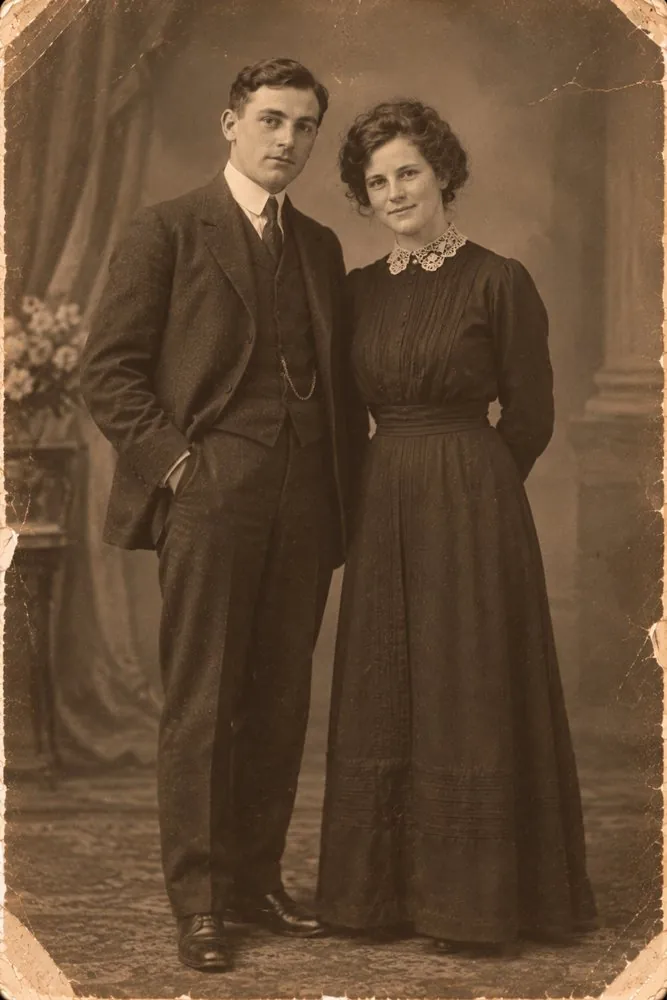
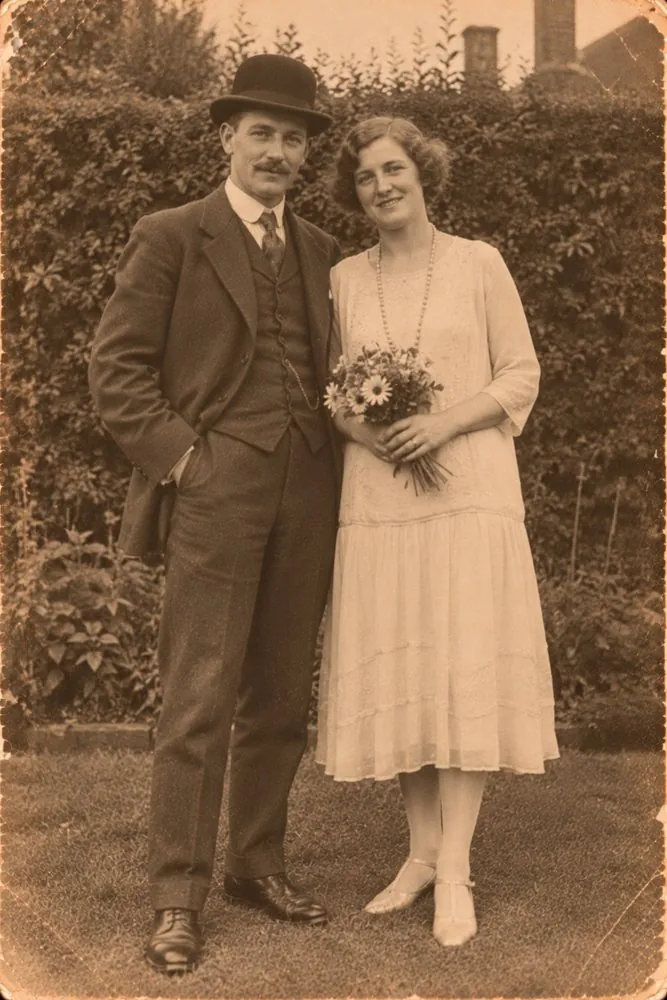
Men’s fashions changed more slowly, but stiff detachable collars, waistcoats and watch chains, and the shape of hats are all worth noticing. Be careful with older people: grandparents often wore the clothes of their younger days, so date a photo by its youngest, most fashionable person.
The people in it
This is the clue family historians are best placed to use. If you know who is in the photograph, your family tree gives you their birth and death dates, and those set firm limits.
Take the yard photograph at the top. Great-grandmother Lena, seated on the right, died in 1933. Her grandson Walter, cross-legged at the front, was born in 1926. So the photograph was taken between 1926 and 1933. Walter looks about six, which puts it close to 1932. Children are the best clocks of all: their apparent age can pin a date to within a year or two.
It works the other way too. If someone’s name is on a photograph taken before they were born, the name is wrong. That’s well worth catching before it’s written into the family history.
Writing on the back
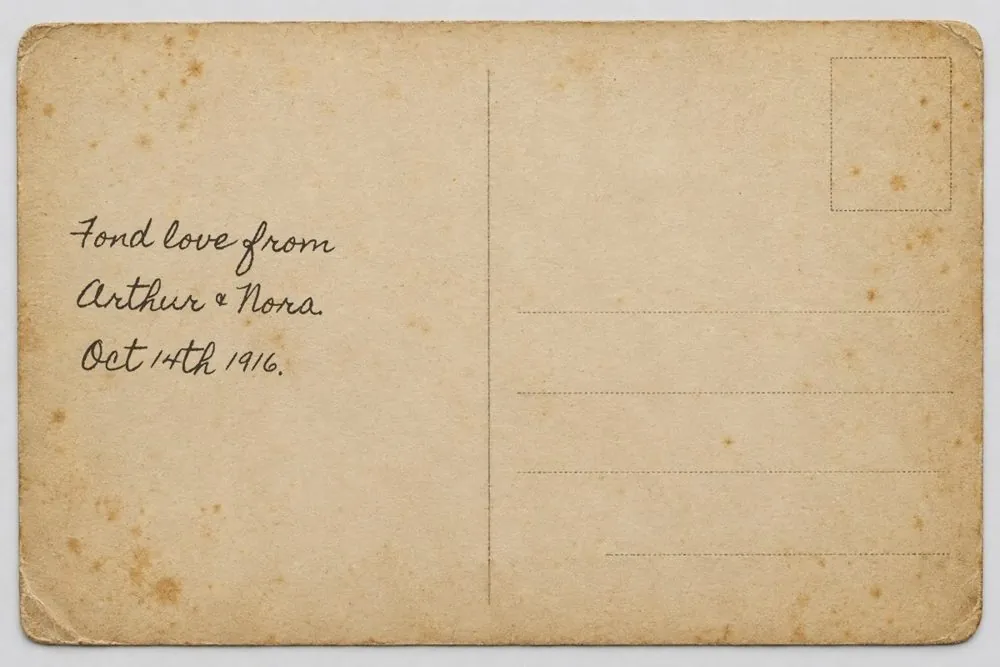
Check the back of every print, even if you think you know it. A pencilled “Mum, Scarborough” or a postmark can settle a question at once. Writing on the back isn’t always right, though. It was often added years later by someone remembering, so treat it as strong evidence rather than proof, and note who wrote it if you know.
Where AI can help
A modern AI assistant such as Claude or ChatGPT makes a remarkably good second pair of eyes for all five clues. Give it a clear scan of the front and back and tell it what you already know. It will:
- describe the clothes, hair and card mount, and suggest a decade for each;
- estimate how old each person looks, which you can check against your family tree;
- read faded pencil and cramped handwriting, and translate German, French or Latin, including the old German Kurrent script that defeats most of us;
- recognise a stamp design or postmark, and know when it was in use;
- work through the calendar for you: which years Whitsun fell on a given weekend, or which day of the week a date was.
Treat what it says as a well-informed suggestion, not a fact. It can misread a word or a name with complete confidence, so check anything important against a record, and keep a note of what came from where. We tell the story of one family postcard, dated to the day this way, in How AI can help you date and read old photographs.
Putting it together
No single clue is decisive. The fun is in letting them agree:
- a postcard-format print: after 1902;
- a woman in a 1920s dropped-waist dress: the 1920s;
- a child of about five, born in 1924: about 1929.
Together they say late 1920s with real confidence.
When you settle on a date, record how you reached it as well as the date itself: “c. 1929, from Rosa’s age and the postcard format”. Whoever looks at the photograph next will thank you.
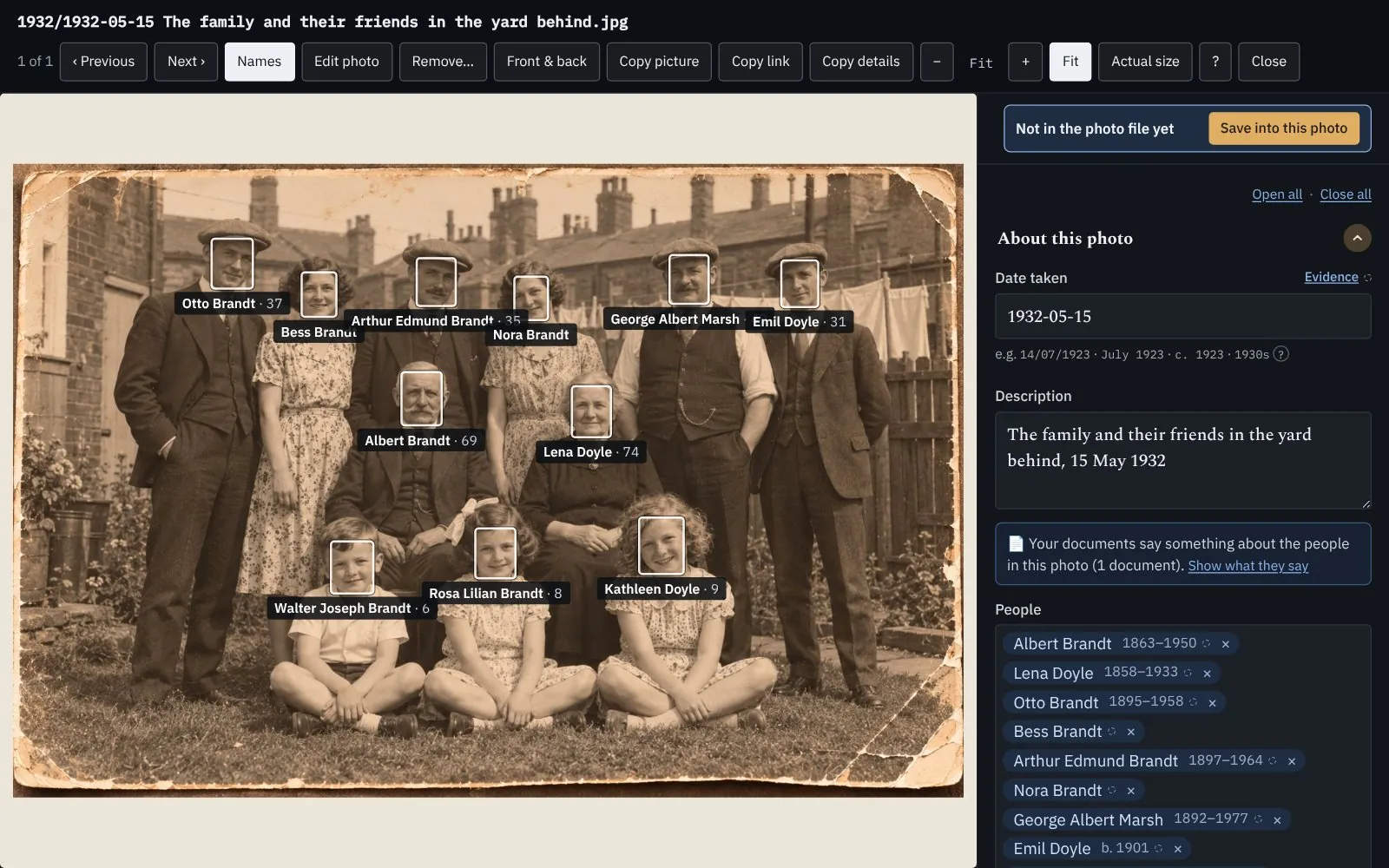
FamiFotos does the family-tree part of this for you. Name the people in a photo and it works out the years they could all have been together, and how old each of them was on the day.